
Why Posture Matters Before School Starts
Back-to-school season brings excitement—new clothes, fresh notebooks, and a packed calendar. But it also introduces prolonged sitting, heavy backpacks, and screen time that can quietly reshape your child’s posture in ways that feel minor at first but compound over months and years. The good news: summer is the perfect time to establish healthy spinal habits before fall routines lock in. A few intentional adjustments now can prevent posture problems that might otherwise take root during the school year.
The Backpack Problem
One of the most overlooked culprits in childhood posture issues is the backpack itself. Many parents don’t realize that a heavy, poorly worn pack can pull a child’s spine forward and sideways, straining muscles and ligaments that are still developing. Kids often sling a backpack over one shoulder or load it with unnecessary items, creating asymmetrical load and forward head posture.
What to do: Look for a backpack with padded, adjustable straps and a firm back panel. The pack should rest just above the lower back and weigh no more than 10–15% of your child’s body weight. Both straps should sit evenly on the shoulders, not twisted or dangling. If your child’s backpack feels heavy during a test carry, audit what’s really needed—textbooks can often stay in lockers or rotate home.
Laptop and Desk Posture
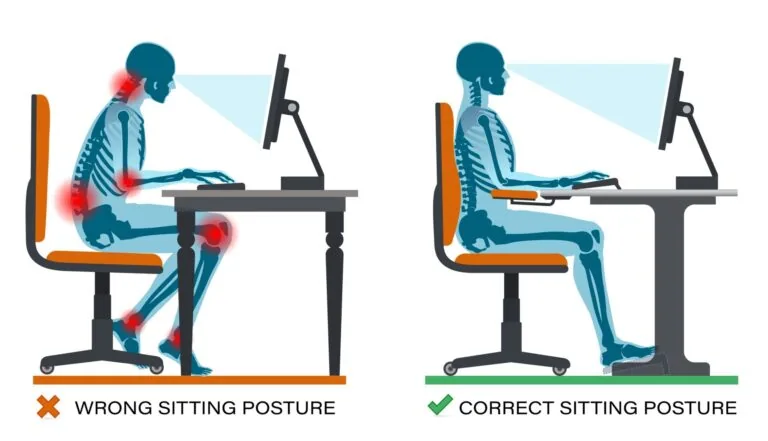
As more schools blend in-class and remote learning, children spend hours hunched over laptops or sitting at desks. This is where forward head posture—one of the most common problems we see in young patients—begins to develop. When a screen sits too low or too far away, kids naturally crane their necks forward, placing extra stress on the cervical spine and upper back muscles.
What to do: Position the screen at eye level, about an arm’s length away. If your child is using a laptop, place it on a stand or stack of books and use an external keyboard and mouse. Make sure the desk chair is adjusted so their feet rest flat on the floor and elbows are at a 90-degree angle. Take breaks every 20–30 minutes—the “20-20-20 rule” is gold: every 20 minutes, look at something 20 feet away for 20 seconds to relax the eyes and neck.
Screen Time and Neck Strain
Phones and tablets are magnets for poor posture. Children naturally look down at these devices, creating what’s sometimes called “text neck.” Over time, this forward bend places surprising pressure on the cervical spine—the equivalent of adding 25+ pounds of force with every degree of forward tilt.
What to do: Encourage your child to hold devices at eye level rather than looking down. Set reasonable screen-time boundaries, especially in the evenings. More importantly, model good habits yourself—kids mirror what they see. If you’re constantly hunched over your phone, they will be too.
Movement and Muscle Balance
Strong, flexible muscles support good posture naturally. Many children today spend recess and free time on devices rather than playing in ways that build strength and balance. Before fall schedules take over, encourage activities like swimming, cycling, climbing, or sports that engage the core and back muscles.
What to do: Aim for at least one hour of movement per day. It doesn’t have to be structured—playing tag, dancing, or climbing trees all count. Stretching is equally important. A few simple routines (gentle neck rolls, shoulder shrugs, and torso twists) can become part of a morning or bedtime ritual.
If you notice your child consistently slouching, complaining of neck or back discomfort, or developing one-sided muscle tightness, a chiropractic evaluation can identify early imbalances before they become chronic issues. A family chiropractor can assess spinal alignment, discuss ergonomics specific to your child’s setup, and offer gentle adjustments or stretching routines tailored to growing bodies.
Investing in spinal awareness and posture habits now—during the unhurried weeks of summer—sets up your child for a healthier, more comfortable school year ahead. Small changes to backpack use, desk setup, and daily movement can make a real difference in how your child feels as September approaches.
Call (201) 995-9900 or visit our contact page.