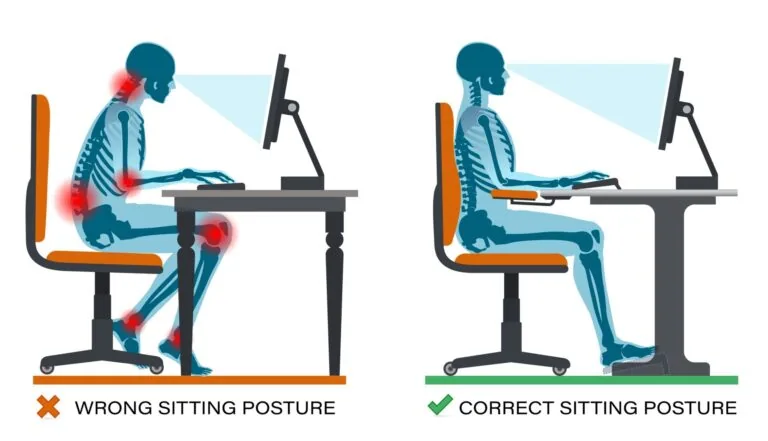

Most people don’t think of sitting as a health risk. It feels harmless, comfortable, and productive. Yet the human body was never designed to sit for long periods of time. When sitting becomes the default position—at work, in the car, and at home—it quietly changes how the body functions.
One of the first things affected by sitting too much is posture. As you sit, especially while looking at a screen, the head shifts forward and the shoulders round. This places added stress on the neck, upper back, and shoulders. Over time, muscles become imbalanced—some tighten while others weaken—making good posture harder to maintain even when standing.
Sitting also places constant pressure on the lower spine. The natural curves of the spine flatten, and the discs between the vertebrae experience uneven stress. This can lead to stiffness, discomfort, and eventually chronic lower back pain. Many people are surprised to learn that sitting can put more strain on the spine than standing or walking.
Reduced movement is another major issue. Joints rely on motion to stay healthy. When movement is limited, joints become stiff and less mobile. Muscles that aren’t used regularly begin to weaken, especially the core and glute muscles that support the spine. As these muscles weaken, the body compensates, often leading to pain in the hips, knees, and lower back.
Sitting too much can also affect circulation and the nervous system. Limited movement slows blood flow, which contributes to fatigue and stiffness. The nervous system depends on proper spinal alignment and motion to function efficiently. When the spine is under constant stress, communication between the brain and body may be less effective.
Family Chiropractor N.J. can help counteract the effects of prolonged sitting by restoring spinal alignment, improving joint mobility, and reducing tension caused by poor posture. Many people notice improved flexibility, reduced discomfort, and better overall function with regular chiropractic care.
While sitting may be unavoidable, its effects don’t have to be permanent. Standing regularly, stretching, changing positions, and supporting spinal health through chiropractic care can help your body function the way it was designed to—balanced, resilient, and adaptable.
Click here to contact Family Chiropractor N.J. or call (201) 995-9900